


Functional training is training that mimics natural, real-life movement patterns - like lifting, carrying, pushing, pulling and rotating. It works several muscle groups at once and improves strength, stability, coordination and mobility. Unlike isolated machine training, it prepares your body for real-world demands. The scientific evidence is clear: functional training measurably improves movement quality and lowers the risk of injury.
The term "functional training" gets thrown around a lot these days. Almost every gym advertises it, and almost every trainer calls their program that. But what's really behind it - and how is it different from traditional strength training?
What is functional training? The definition
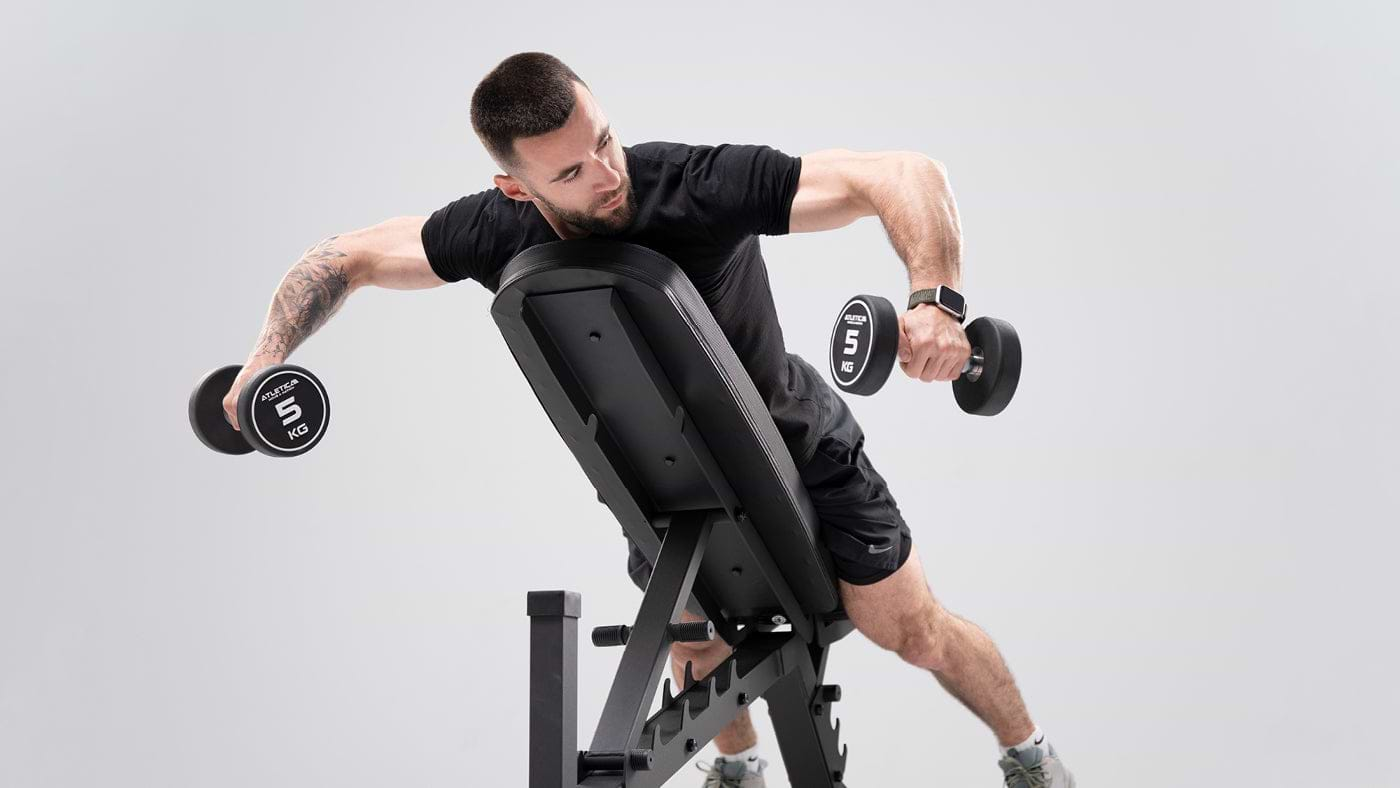
Functional training is a form of training that systematically prepares your body for the demands of everyday life and sports. The focus is on movement patterns, not individual muscles.
The definition can be boiled down to one sentence: Functional training optimizes your physical performance in everyday life and activities through exercises that mimic natural movement patterns and involve several joints and muscle groups at once.
Its origins lie in medical rehabilitation. From there, the concept made its way into sports, where it's used to improve sport-specific performance. Functional training increases mobility, joint stability, strength, speed and motor coordination through neural adaptation.
The 7 movement patterns of functional training
Functional training is based on seven fundamental movement patterns that cover all everyday activities:
| Movement pattern | Everyday example | Sports example |
|---|---|---|
| Squat | Getting up from a chair, using the toilet | Jumping power, acceleration |
| Hinge | Picking something up off the floor | Deadlift, jump |
| Push | Pushing open a heavy door, lifting a box overhead | Throwing, striking |
| Pull | Carrying grocery bags, climbing | Rowing, pull-up |
| Rotate | Handing something to the side | Golf swing, tennis |
| Carry | Carrying a case of drinks | Backpack, body contact |
| Walk/run | Climbing stairs, going for a walk | Sprinting, endurance |
These patterns mirror exactly the movements you perform every day: standing up, climbing stairs, carrying grocery bags, picking something up off the floor, putting a heavy object on a shelf.
The scientific evidence: What studies show
Functional training isn't a trend without substance. The research is solid - here are the key findings from systematic reviews and meta-analyses:
Improved movement quality (FMS score)
An integrative review with 162 participants compared functional training with traditional sports training. The result: Functional training produced a 5.61-point advantage on the Functional Movement Screen (FMS) and a 23.12-point improvement in athletic performance compared with the control group. Functional strength training significantly increased the FMS score from an average of 13.68 to 16.63 points.
A meta-analysis of 40 studies with 1,604 athletes confirmed that targeted training interventions - especially strength training, neuromuscular training and functional training - consistently increased FMS scores. Core stability training produced the largest effect size (MD: 2.89).
Improved physical performance
A meta-analysis of 19 high-quality studies with 911 healthy participants examined the effects of high-intensity functional training (HIFT). The results:
- Strength: effect size 1.380 (p < 0.001)
- Power/explosiveness: effect size 1.320 (p < 0.001)
- Speed: effect size 3.093 (p < 0.001)
- Endurance: effect size 1.802 (p < 0.001)
- Agility: effect size 2.086 (p < 0.001)
A systematic review of 28 studies with 819 athletes from 12 countries confirmed that functional training significantly improves athletes' physical and technical performance.
Lower risk of injury
Functional training is more effective than traditional methods at reducing the risk of musculoskeletal injuries. The mechanism: By improving neuromuscular coordination and movement quality, your body becomes more resilient - not just in training, but in everyday life.
Body composition
An eight-week study with young, untrained adults showed that functional training led to a significant reduction in body fat percentage (p = 0.008) and significant improvements in all dynamometric parameters (p < 0.01).
Functional training vs. traditional strength training: The differences
| Criterion | Functional training | Traditional strength training |
|---|---|---|
| Focus | Movement patterns | Individual muscles |
| Planes of motion | Multiplanar (3D) | Mostly sagittal (1D) |
| Joint involvement | Multi-joint | Often isolated |
| Muscle activation | Entire kinetic chain | Localized |
| Goal | Fitness for everyday life and sports | Muscle growth, max strength |
| Equipment | Kettlebells, bands, medicine balls, bodyweight | Machines, barbell, dumbbells |
| Carryover to everyday life | High | Low to medium |
Traditional strength training isolates muscle groups and often works in a single plane of motion. Functional training integrates several joints, planes of motion and muscle groups into one coordinated pattern. The kinetic chain - the interplay of your upper body, lower body and core muscles - takes center stage.
The best functional training exercises
Basic exercises without equipment
| Exercise | Movement pattern | Target muscles |
|---|---|---|
| Squat | Squat | Legs, glutes, core |
| Lunge | Squat (unilateral) | Legs, glutes, balance |
| Push-up | Push | Chest, shoulders, triceps, core |
| Plank | Anti-rotation | Core, shoulders |
| Glute bridge | Hinge | Glutes, hamstrings |
| Step-up | Squat/walk | Legs, glutes, balance |
Kettlebell exercises
| Exercise | Movement pattern | Highlight |
|---|---|---|
| Kettlebell swing | Hinge | Explosive hip extension, entire posterior chain |
| Goblet squat | Squat | Front load heavily engages the core |
| Turkish get-up | Multiplanar | Full-body coordination, shoulder stability |
| Kettlebell clean & press | Pull + push | Muscular endurance, shoulders |
Plyo box exercises
| Exercise | Movement pattern | Highlight |
|---|---|---|
| Box jump | Jump | Explosive power, reactive strength |
| Step-up | Squat/walk | Single-leg strength, balance |
| Box squat | Squat | Controlled depth, technique work |
| Decline push-up | Push | Greater chest activation |
Battle rope exercises
| Exercise | Movement pattern | Highlight |
|---|---|---|
| Alternating waves | Rotate/carry | Shoulders, core, endurance |
| Double slams | Hinge + push | Full body, explosiveness |
| Rope pulls | Pull | Back, biceps, grip strength |
| Lateral whips | Rotate | Lateral core stability |
What equipment do you need for functional training?
Functional training works with minimal equipment - but the right tools expand your training options considerably.
Kettlebells: The foundation
Kettlebells are the most versatile functional training tool. Because their center of mass sits below the handle, they engage your core more than any other type of weight.
ATLETICA recommendation: The Kettlebell Set Top 3 (8/16/26 kg) covers all the basic functional exercises. All ATLETICA kettlebells have the same 4 cm handle diameter - regardless of weight. That gives you a consistent feel in training and makes it easier to switch between weights.
Plyo boxes: Explosive power and balance
Plyo boxes are a must for jumping power, step-ups and single-leg stability exercises.
ATLETICA recommendation: The Plyo Box Classic is made of 18 mm thick plywood with an interlocking design and internal reinforcement struts. It gives you three jump heights in one box (50, 60 and 76 cm) - just flip it over - and is rated up to 200 kg. The Plyo Box PRO also has a neoprene cover with foam padding that reduces the classic shin scrapes on wooden edges. The PlyoBox Modular consists of four stackable boxes (60, 45, 30, 15 cm) for maximum flexibility.
Battle ropes: Muscular endurance and conditioning
Battle ropes deliver an effective full-body workout that strengthens your muscles and improves endurance. The dynamic movements engage your entire body and increase muscular endurance and coordination. An eight-week study showed that battle rope interval training significantly improved cardiometabolic risk factors in people with overweight - including lower total and LDL cholesterol and a higher VO2max. Nine weeks of battle rope training had a positive effect on reducing body fat, building lean mass and developing explosive power.
ATLETICA recommendation: The HRX Battle Rope 15 m is ideal for dynamic strength and endurance exercises.
More functional training tools from ATLETICA
| Product | Use | Highlight |
|---|---|---|
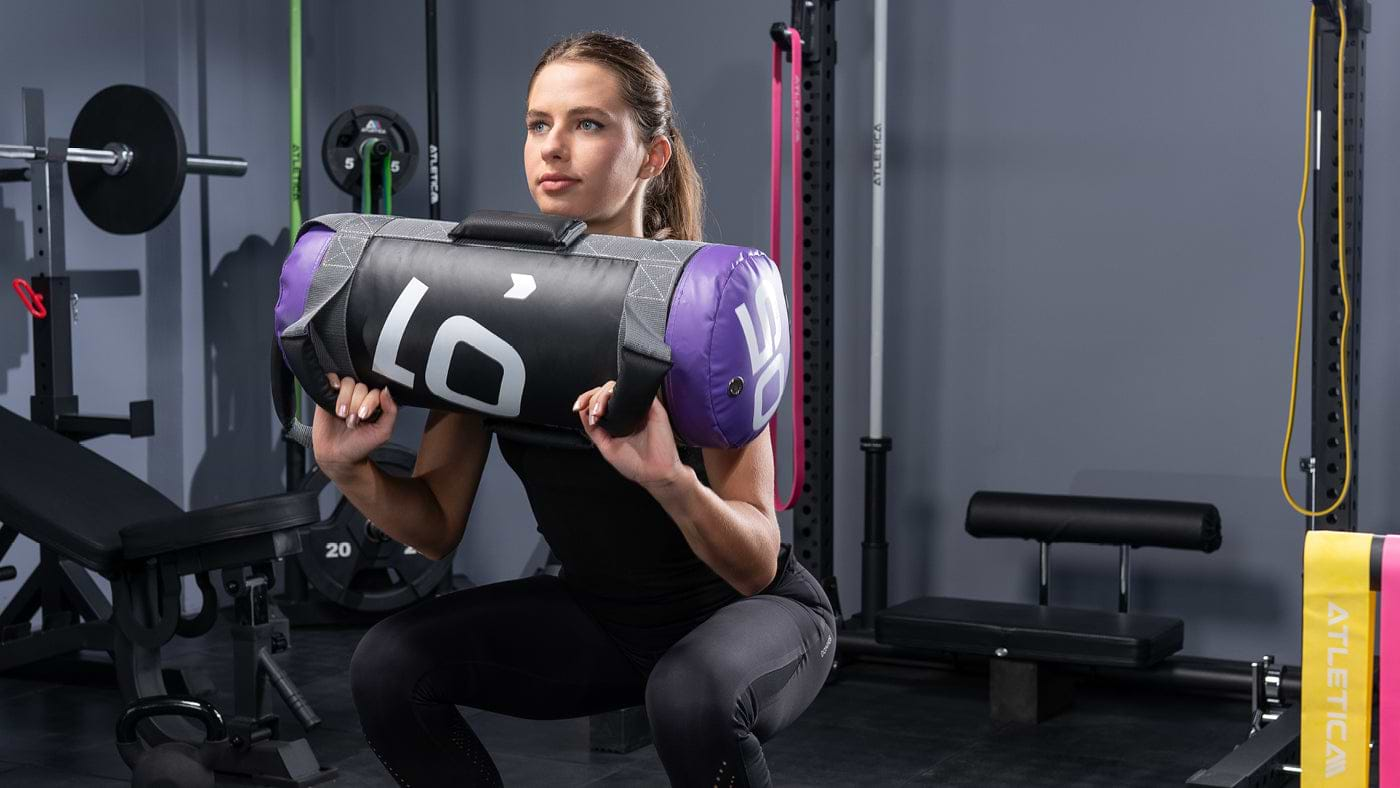
| Sandbag 10–30 kg | Carrying, lifting, throwing | Unstable load maximizes core engagement |
| Power Bag sets | Throwing, carrying, striking | Multiple weights for progression |
| HRX Wall Balls | Throwing, squat + push | Full-body explosiveness |
| Sling Trainer | Bodyweight exercises | Instability training, core |
| Multi Grip Pull-Up Bar | Pulling, pull-ups | Multiple grip options |
| Dip Station (folding) | Pushing | Space-saving, versatile |
| Parallettes | Support holds, handstands | Easy on the wrists |
ATLETICA offers a total of 41 functional training products - from plyo boxes and battle ropes to wall balls and sling trainers.
A 4-week starter plan for functional training
Weeks 1–2: The basics
3 sessions per week, 30–40 minutes
| Exercise | Sets × reps |
|---|---|
| Goblet squat (kettlebell) | 3 × 10 |
| Kettlebell swing | 3 × 12 |
| Push-up | 3 × 8–12 |
| Step-up (plyo box) | 3 × 10 per leg |
| Plank | 3 × 30 sec |
Weeks 3–4: Ramping up
3–4 sessions per week, 40–50 minutes
| Exercise | Sets × reps |
|---|---|
| Kettlebell swing | 4 × 15 |
| Goblet squat | 4 × 10 |
| Box jump (plyo box) | 4 × 6 |
| Battle rope alternating waves | 4 × 30 sec |
| Turkish get-up (light) | 3 × 3 per side |
| Plank with leg lift | 3 × 8 per side |
Frequently asked questions
What exactly is functional training?
Functional training is a training approach that mimics natural movement patterns and involves several muscle groups and joints at once. It improves strength, stability, coordination and mobility for everyday life and sports.
Who is functional training for?
Functional training is suitable for every fitness level - from beginners to pros. The exercises can be adapted to your individual level. It's especially valuable if you want to move better in everyday life or prevent injuries.
What are typical functional training exercises?
Typical exercises include squats, lunges, deadlifts, push-ups, planks, kettlebell swings, box jumps and rotational exercises.
What equipment do I need for functional training?
To get started, your own body weight is enough. For more versatility, we recommend kettlebells, plyo boxes, battle ropes, resistance bands and medicine balls. ATLETICA offers tested quality in all of these categories.
Can I do functional training at home?
Yes. Many functional training exercises work at home without any equipment. With kettlebells, resistance bands and a plyo box, you can expand your training considerably - in just a few square meters.
How often should I do functional training?
For beginners, 2–3 sessions per week are ideal. Advanced athletes can train 3–4 times per week. What matters is getting enough recovery between sessions.
What's the difference between functional training and cross-training?
Cross-training is a form of training that combines functional training with high intensity, constantly varied workouts and often competitive elements. Functional training is the overarching approach - cross-training is one of many ways to put it into practice. If you're training for functional fitness races, you'll find the right equipment like sleds, wall balls and sandbags in ATLETICA's HRX collection.
Is functional training suitable for seniors?
Yes, especially so. Functional training improves exactly the abilities that become important with age: standing up, climbing stairs, balance and fall prevention. The exercises can be adapted to your individual level.
Bottom line: Functional training is more than a trend
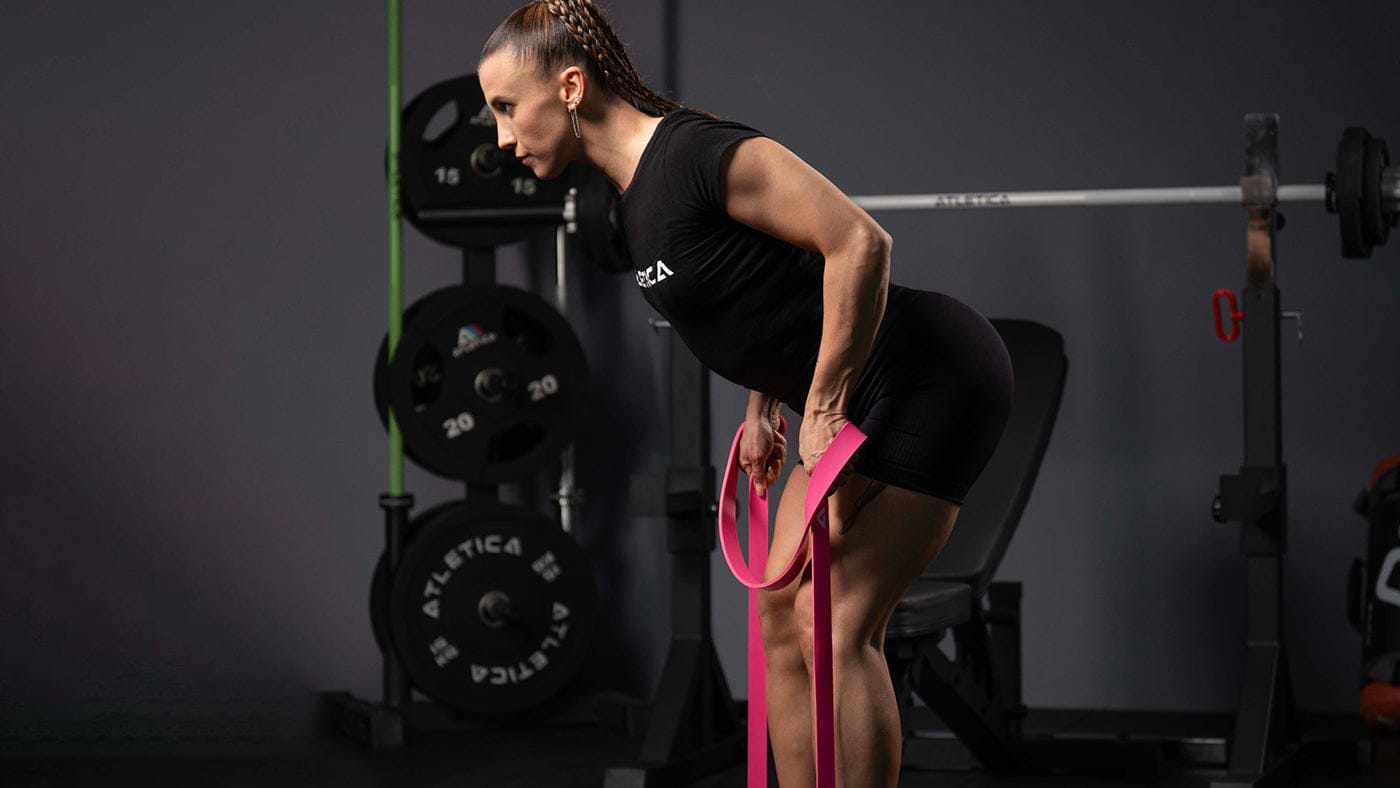
Functional training isn't a buzzword - it's a science-based training approach with measurable results. The research shows that functional training improves movement quality, increases strength, power, endurance and agility and reduces the risk of injury.
The three key takeaways:
- Movement patterns, not muscles. Functional training trains your body as a whole - not isolated muscles.
- The evidence is strong. Meta-analyses with more than 900 participants show significant effects on strength, power, speed and endurance.
- The equipment is manageable. Kettlebells, a plyo box and a battle rope cover 90% of all functional exercises.
Next step: Start with the 4-week starter plan from this article. ATLETICA offers every tool you need in TÜV-tested quality - from kettlebells and plyo boxes to battle ropes.
Recommended functional training setup
| Product | Approx. price | Link |
|---|---|---|
| Kettlebell Set Top 3 (8/16/26 kg) | from €189 | View set |
| Plyo Box Classic (3 heights) | from €179 | View box |
| HRX Battle Rope 15 m | from €89 | View rope |
| Sling Trainer | from €99 | View trainer |
Total investment: under €560 - a complete functional training setup for your home gym.


